


You may have seen the news on Friday that Frank Gehry, one of the world’s most famous architects, had just died.
I had heard the name before, but what I didn’t know was that his career was far from smooth.
Enjoy!
Gorick
TODAY’S TAKEAWAY
Focus on what’s working.
When things aren’t going your way, it’s easy to feel like everything is falling apart. In reality, something’s probably still working. Identify that thing. It’s the key to unlocking what’s next.
THE STORY
A midlife crisis that few remember
If you’ve ever walked around Los Angeles, Boston, or Seattle, then you may have seen:
- The Walt Disney Concert Hall
- MIT’s Stata Center
- The Museum of Pop Culture
But what you may not have realized is that all of these buildings, known as “deconstructivist style,” are by the same architect.
His name was Frank Gehry and the BBC named him “one of the most influential architects of the last century.” Gehry died on December 5, 2025 at the age of 96.
(See below for a longer list of his works.)
But did you know that, before Gehry’s success, he was battling a stalled career and a midlife crisis?
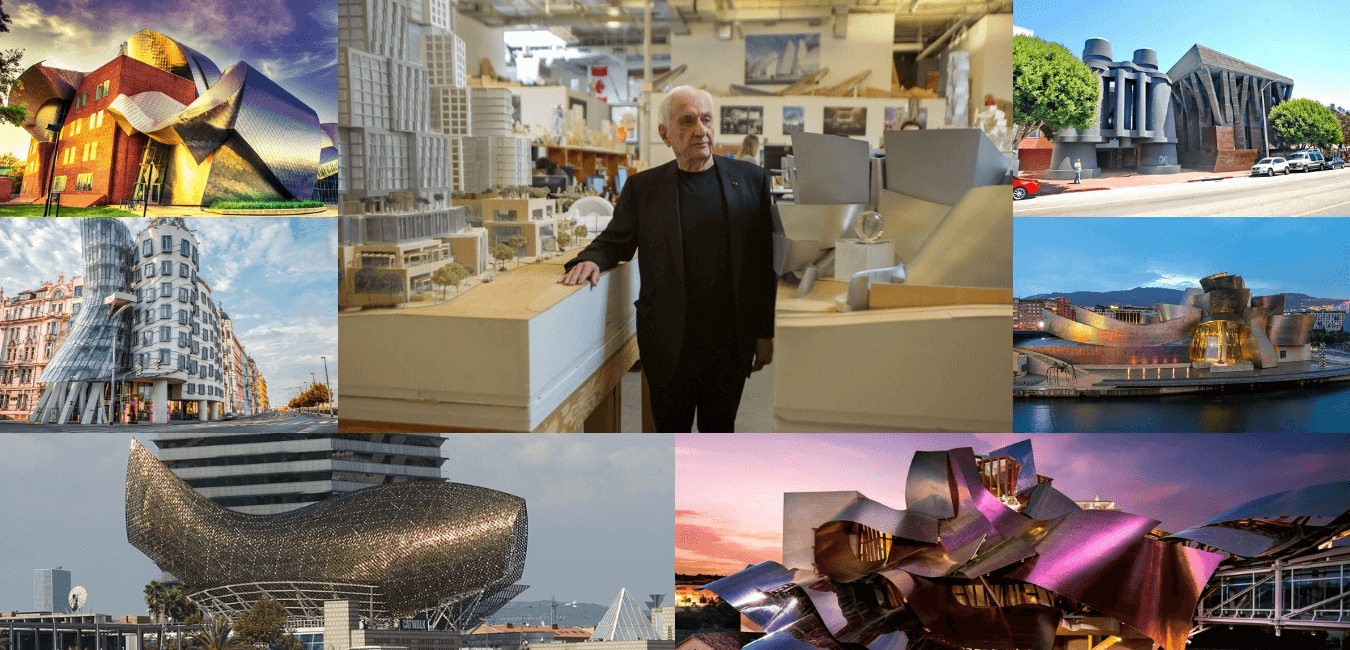
It was the early 1970s, and Gehry—then in his 40s—had just shut down his corrugated cardboard “Easy Edges” furniture startup after realizing that he wanted to focus on architecture.
At first, Gehry focused on “relatively conventional” projects like shopping malls and office buildings. Then, his designs became “more imaginative”: in one instance, he redid his Santa Monica home in such an eclectic manner that even his own neighbors got “really pissed off.”
“Is this what you like?” a developer client asked him in 1980 about his home.
When Gehry said it was, the client responded: “Well, if you like this, you can’t possibly like that,” pointing at the shopping center Gehry was working on, “so why are you doing it?”
So, at just over the age of 50, Gehry decided he would “start over again”—but it would be far from easy.
- His work on LA’s Walt Disney Concert Hall was stalled due to funding shortages and political infighting
- Multiple high-profile projects (e.g., the Brooklyn Atlantic Terminal, the National Gallery of Canada restoration, and the Emory University Law Library) were also stalled, canceled, or significantly altered due to controversy and lack of funding
- The U.S.’s excitement towards Gehry’s work declined further and further
Despite these difficulties, Gehry saw an opportunity for his work overseas. He went on to spend his 90s working on projects in Europe, which quickly accounted for 40% of his completed projects.
International headlines for his work on the Guggenheim Museum in Bilbao, Spain and the “Dancing House” in Prague caught the attention of his American clients, who then welcomed Gehry back with open arms. After he returned, Gehry was quick to make his mark through the Museum of Pop Culture in Seattle and—at long last—the Walt Disney Concert Hall.
Fast forward 30 years since that stalled concert hall project and Gehry is now listed as one of the most famous architects of all time (with few people remembering that his career ever stalled). Some of his most well-known projects include:
- Vitra Design Museum (Weil am Rhein, Germany)
- Cinémathèque Française (Paris, France)
- Foundation Louis Vuitton (Paris, France)
- Walt Disney Concert Hall (Los Angeles, California)
- Dancing House (Prague, Czech Republic)
- Guggenheim Bilbao (Bilbao, Spain)
- Peter B. Lewis Building (Cleveland, Ohio)
- Lou Ruvo Center (Las Vegas, Nevada)
- Biomuseo (Panama City, Panama)
- Marqués de Riscal (Elciego, Spain)
- Gehry Tower (Hanover, Germany)
- New York by Gehry (New York City, New York)
- Weisman Art Museum (Minneapolis, Minnesota)
- Stata Center (Cambridge, Massachusetts)
- Museum of Pop Culture (Seattle, Washington)
(See “Sources” below for a full list of Gehry’s projects.)
THE UNSPOKEN RULE
Focus on what’s working.
What I learned from Gehry is that if it seems like everything is falling apart, that’s probably not true.
Something has gotten you far enough to be wherever you are (or were). Identify it—and double down on it.
To find what’s working, ask yourself:
- “In a sea of no’s, who’s saying yes?”
If no one is saying “yes” these days, ask yourself:
- “Who’ve been my biggest fans, so far?”
- “Where can I find more of these people?”
I remember catching up with a friend who was struggling to get interviews.
“Did you get a single interview?” I asked.
“Well yes,” he replied. “Two, actually.”
“How did you get them?” I asked.
“I got introduced through alumni of my firm.”
And just like that, this friend found what worked, doubled down, and started seeing momentum again.
See you Tuesday for our next story and unspoken rule!
—Gorick
WHAT I’M READING
Here are 3 articles that I found interesting recently (no paywalls, although it may depend on your cookies):
- “Why employability gaps widen as academic identity deepens” (Times Higher Education)
- “Younger workers are heading back to the office to save their careers” (QZ)
- “Origins of the 'Ostrich Effect': Researchers pinpoint the age we start avoiding information—even when it's helpful” (Medical Xpress)
MORE OF MY WORK
Every newsletter is free and a fraction of my work. Here are 4 of my paid offerings that may interest you:
1. Keynote speaking: If your organization is looking for speakers for your internship program, new hire orientation, new student orientation, manager training, all-hands meetings, recruiting season, year-end performance evaluation season, or something else, let's chat!
2. How to Say It: Flashcards that teach you to know what to say in every high-stakes professional setting via hundreds of fill-in-the-blank scripts (just like the examples above). Free shipping on all orders over $40.
3. The Unspoken Rules: My Wall Street Journal Bestseller that Arianna Huffington calls “a blueprint for anyone starting their career, entering a new role, or wanting to get unstuck.” Used by top companies and MBA programs.
4. Soft skills crash course: Hard skills get you hired, but a lack of soft skills gets you fired. Equip your interns and early career talent with the essential behaviors of high performers in just 3.5 hours.
STORY SOURCES


