


To celebrate the already snowy winter our friends are having in the Northeastern US and Canada, I thought I'd do a flashback story from the tundra of Alaska.
Enjoy!
TODAY’S TAKEAWAY
Pick your team wisely.
A team is successful when the right people are doing the right jobs.
THE STORY
How one team saved a whole town
It was the winter of 1925—and a fatal bacterial infection called Diphtheria had just broken out in rural Nome, Alaska, USA. The estimated mortality rate of the region’s 10,000 people was 100%.
The good news: There was a diphtheria antitoxin available.
The bad news: It was located in Anchorage, Alaska—1,000 miles away from Nome, requiring over a week for air delivery because it was out of reach by rail.
So, city officials arranged for a train to bring the serum as far as it could and then for a relay of sled dogs to run the remaining 674 miles in what became known as the “Great Race of Mercy.”
Stationed at checkpoints across 674 miles of icy tundra, one sled team would carry the life-saving serum before passing it off to the next, like a “pharmaceutical relay.”
But not just any dog could participate. Each dog needed to be able to perform a specific function in the 8-dog formation:
- “Wheel Dogs” (at the back) were chosen for size and strength to help pull and turn the sled.
- “Team Dogs” and “Swing Dogs” (in the middle) were selected for their “horsepower” and their desire to follow a leader, which helped keep the sled on course.
- “Lead Dogs” (at the front) were selected for their ability to set the pace, listen to the driver’s cues, and help keep the sled on track.
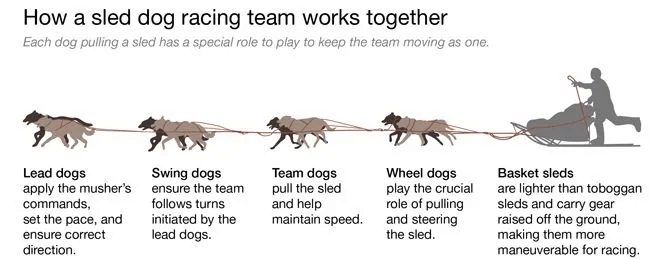
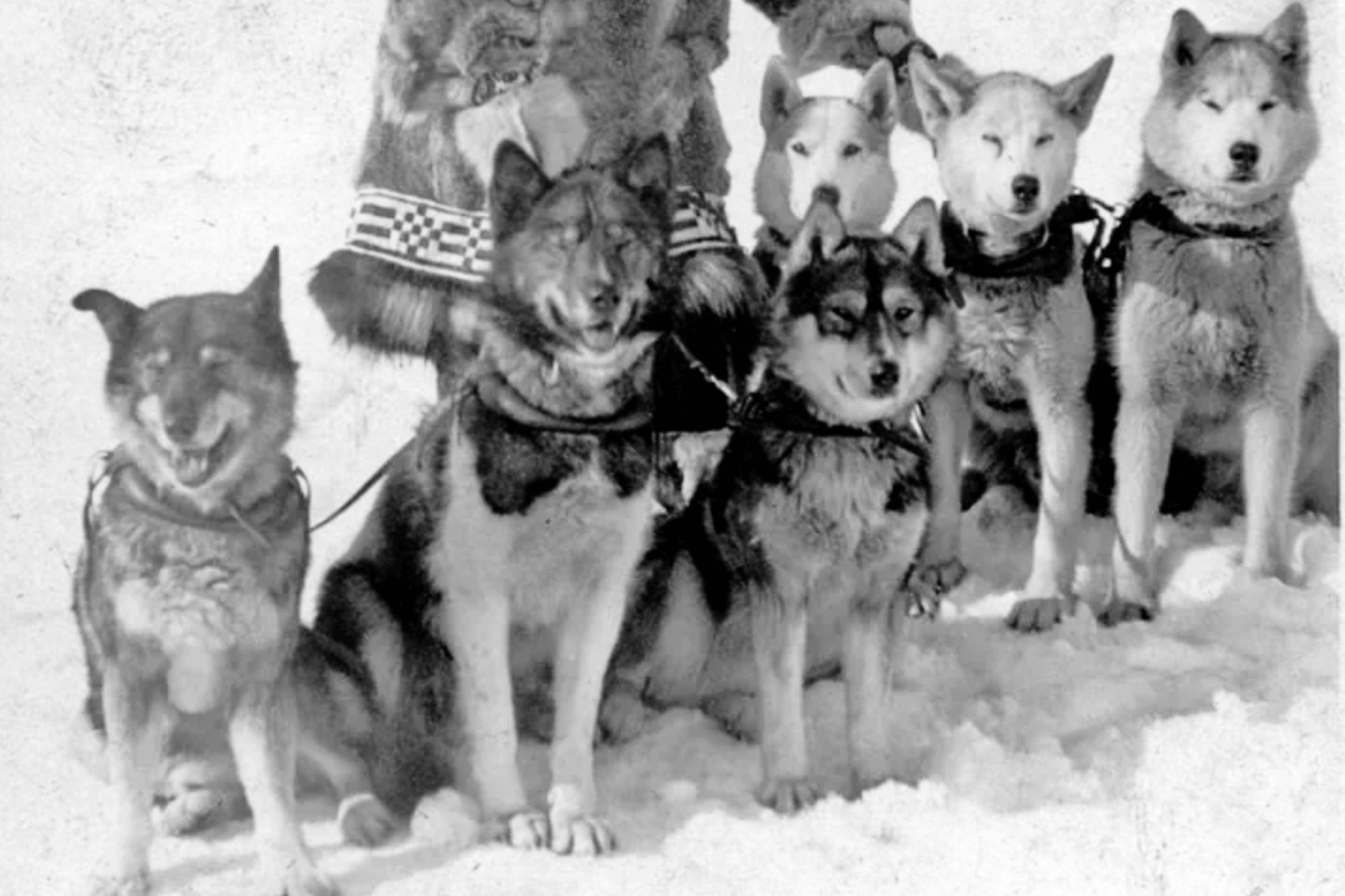
Most of the dogs chosen for the “Great Race of Mercy” were veteran sled dogs who knew their job and did it well (like a dog named Togo). But even unproven dogs had a chance to shine, like 3-year-old Balto, who was the Lead Dog who crossed the finish line into Nome.
By the end of the five-and-a-half-day journey, all 674 miles were covered and the serum was safely delivered to the residents of Nome, Alaska.
THE UNSPOKEN RULE
Pick your team wisely
You need more than just strong individuals to build a great team. You need people who are playing to their strengths, just like how:
- A soccer team needs offense and defense
- A film crew needs a cast and crew
- A choir needs the tenors and sopranos
(Or even like this unofficial Star Wars director I wrote about last year.)
The next time you find yourself leading a team, ask yourself:
1. Is every task being done by the best possible person?
- This is key if you’re building a new team to ensure you have an “A team” and not a “B team.”
2. Is every person doing the most suitable task?
- This is key if you’re leading an existing team to ensure everybody is doing the right work.
The next time you find yourself joining a team, ask yourself:
1. “What's something I'm good at that this team isn't good at?”
- This is your hidden opportunity to stand out by being valuable.
2. “What's something I'm not good at that someone else on this team is good at?”
- This is your hidden opportunity to learn and grow.
Like a sled dog formation, successful teams don’t just have great leaders. They have great people in every role who keep the team moving forward on course.
See you next Tuesday for our next story and unspoken rule,
Gorick
WHAT I’M READING
Here are 3 articles that I found interesting recently (no paywalls, although it may depend on your cookies):
- “Feeling Lonely? An Attentive Listener Is an AI Prompt Away” (Harvard Business School)
- “Why Americans don't want to move for jobs anymore” (NPR)
- “The Erosion of Context in Admissions” (Inside Higher Ed)
MORE OF MY WORK
Every newsletter is free and a fraction of my work. Here are 3 of my paid offerings that may interest you:
1. Keynote speaking: If your organization is looking for speakers for your internship program, new hire orientation, new student orientation, manager training, all-hands meetings, recruiting season, year-end performance evaluation season, or something else, let's chat!
2. How to Say It: Flashcards that teach you to know what to say in every high-stakes professional setting via hundreds of fill-in-the-blank scripts (just like the examples above). Free shipping on all orders over $40.
3. The Unspoken Rules: My Wall Street Journal Bestseller that Arianna Huffington calls “a blueprint for anyone starting their career, entering a new role, or wanting to get unstuck.” Used by top companies and MBA programs.
4. Soft skills crash course: Hard skills get you hired, but a lack of soft skills gets you fired. Equip your interns and early career talent with the essential behaviors of high performers in just 3.5 hours.
Follow me on LinkedIn
STORY SOURCES


