


Did you know that the average American takes a photo on their smartphone 6 times a day?
It wasn’t always this way. Keep reading to learn more about the person (and the person behind the person) who made “instant” photography possible—and the lessons we can apply to our own careers and lives.
Gorick
TODAY’S TAKEAWAY
Listen to outsiders.
Because fresh perspectives often reveal opportunities and solutions that insiders overlook.
THE STORY
He listened to the question of a 3-year-old
It was 1943 and inventor Edwin H. Land and his family went on vacation in Santa Fe, New Mexico. To preserve the memories, he brought his camera.
But it wasn’t the camera we know today. Back then, photography required patience. You had to wait days, sometimes weeks, before seeing the picture you took because it needed to be professionally developed.
Jennifer Land, his 3-year-old daughter, hated the idea of waiting. She asked her father, “Why can’t I see the pictures now?”
Jennifer’s simple yet logical question sparked something in Land’s mind.
“So, I went for a walk, haunted by my daughter’s question,” Land recalled. “During the course of the walk, the question kept coming, ‘Why not?’ Why not make a camera that gave a picture right away?”
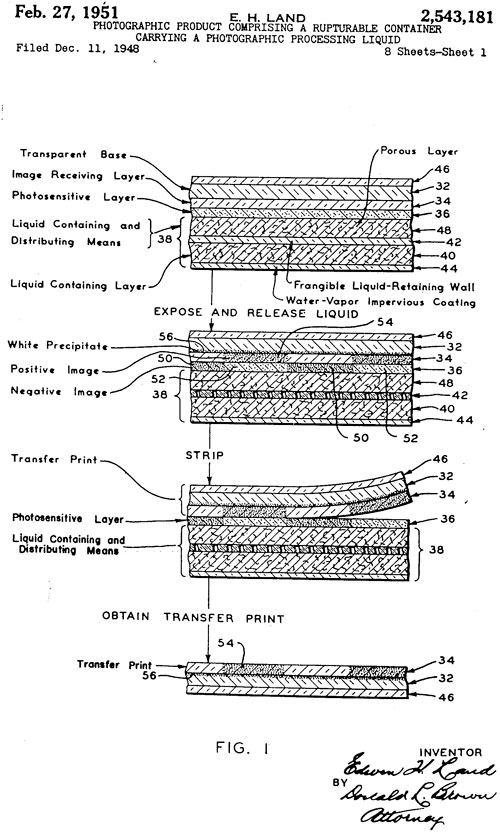
So he:
- Spent a few hours sketching up a “one-step” photographic system on that same vacation
- Developed a film that could expose and develop itself using layers of chemicals activated by light and pressure over the next few years
- Released the first Polaroid Land Camera in 1948, 5 years after his daughter’s commentary, and sold out immediately
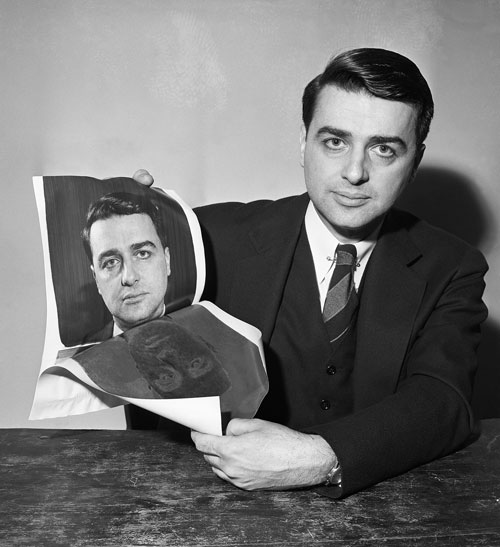
Polaroid became a cultural icon and Land’s “impossible” idea paved the way for digital photography—all because he listened to a 3-year-old.
THE UNSPOKEN RULE
Listen to outsiders
In your career, it’s easy to think the best ideas come from the most senior, most credentialed people in your field.
This may be true sometimes… but not all the time.
Sometimes, it’s the casual onlooker who doesn’t know the jargon, traditions, or “the way things have always been done” who holds the key to a breakthrough.
What does this mean for you?
- The next time you’re looking at a company you’d like to work for and are thinking, “I can’t believe they aren’t doing _______!”... email a decision maker with your idea, share your strategy (or, better yet, a mockup or prototype), and ask for a call in lieu of submitting a resume and waiting for a call-back. (Who knows: you might just fast-track your way to a final-round interview.)
- The next time you’re sitting in on a meeting at work and are thinking, “Why aren’t we considering _______?”... pull your manager aside afterwards and share your idea or raise it in the meeting if you’re following the unspoken rule. (Who knows: you might have just created a new job for yourself.)
- The next time you’re in a new city and are thinking, “What should I do with this free afternoon?”... skim your LinkedIn or contact list to see if there’s someone you haven’t caught up with in a while. (Who knows: you might just learn something new that can change your perspective.)
After all, if a 3-year-old can spark an invention, who knows what might happen if you spoke up (and encouraged others to speak up)!
See you next Tuesday for our next story and unspoken rule,
Gorick
WHAT I’M READING
Here are 3 articles that I found interesting recently (no paywalls, although it may depend on your cookies):
- The Gig Work Gender Gap
- New study shows how the brain weighs evidence to make decisions
- Parents Invest Over $50,000 to Secure Job Opportunities for Their Children
MORE OF MY WORK
1. Keynote speaking: If your organization is looking for speakers for your internship program, new hire orientation, new student orientation, manager training, all-hands meetings, recruiting season, year-end performance evaluation season, or something else, let's chat!
2. HOW TO SAY IT ®: Flashcards that teach you to know what to say in every high-stakes professional setting via hundreds of fill-in-the-blank scripts (just like the examples above). Free shipping on all orders over $40.
3. The Unspoken Rules: My Wall Street Journal Bestseller that Arianna Huffington calls “a blueprint for anyone starting their career, entering a new role, or wanting to get unstuck.” Used by top companies and MBA programs.
4. Soft skills crash course: Hard skills get you hired, but a lack of soft skills gets you fired. Equip your interns and early career talent with the essential behaviors of high performers in just 3.5 hours.
STORY SOURCES
- The average American takes a photo 6 times a day
- inventor Edwin H. Land
- his family went together for a vacation in Santa Fe
- You had to wait days
- it needed to be professionally developed
- “Why can’t I see the pictures now?”
- “So, I went for a walk, haunted by my daughter’s question”
- sketching up a "one-step" photographic system
- Developed a film that could expose and develop itself
- Released the first Polaroid Land Camera in 1948
- E.H. Land’s instant photographic film patent drawing
- Land’s 1947 public demonstration of instant photography in New York
- Cover image


