TODAY’S TAKEAWAY
Find a more efficient way.
You never know how it might impact others in your niche—or the world.
THE STORY
The GIF’s original purpose
Did you know that, before the GIF became the internet’s favorite way to send memes, it was a software engineer’s response to slow internet?
It was 1987. A software engineer named Steve Wilhite was working at the internet company CompuServe in Ohio.
At the time, sending images over dial up connections was slow and unreliable. Connections were frequently dropped, color files were often too large, and images didn’t look the same on every system.
While others either scratched their heads or accepted the problem as a fact of life, Wilhite had a different thought: if the problem is bandwidth, then why not reduce the size of the files?
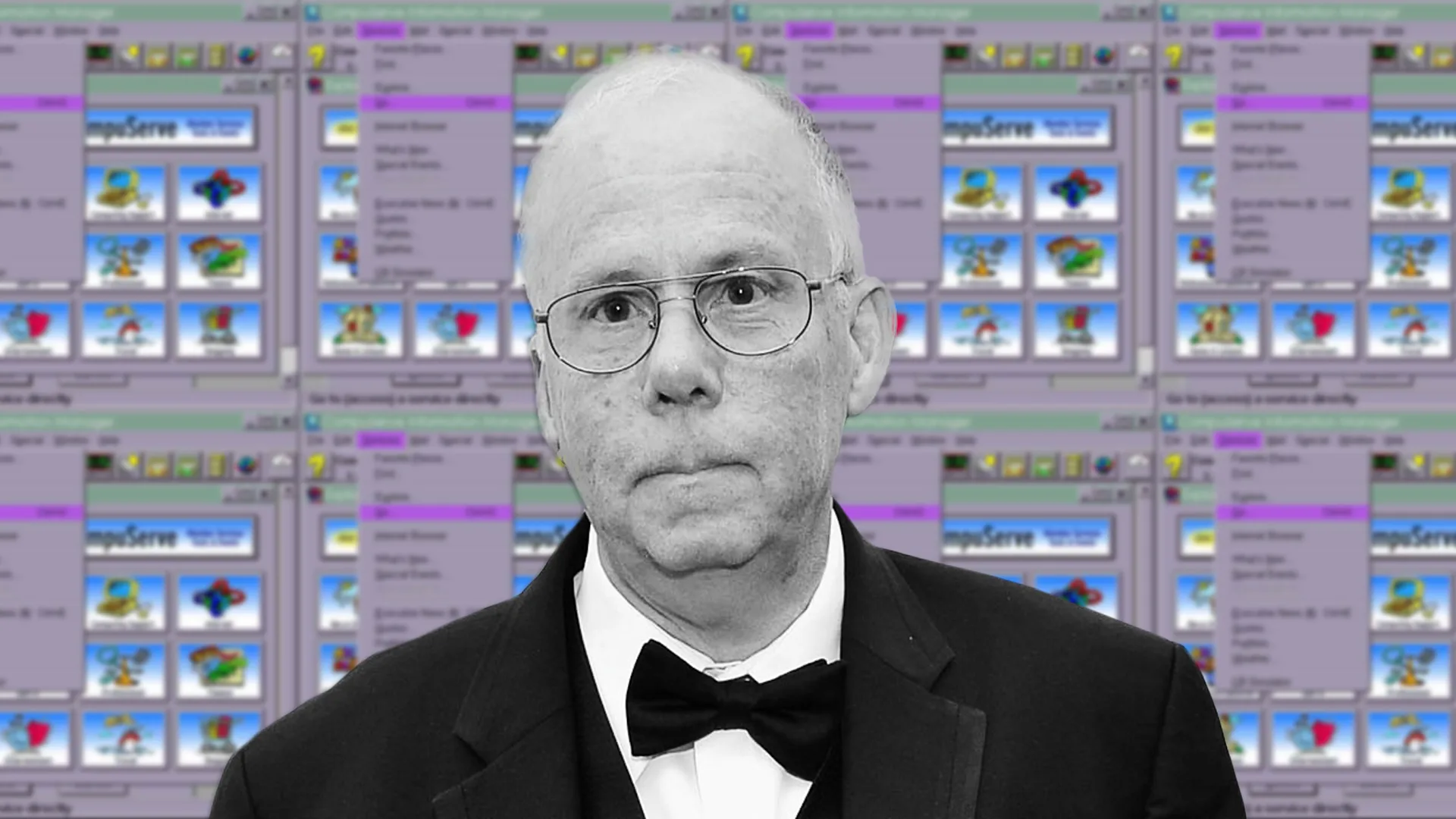
Steve Wilhite, the creator of GIF.
So, he:
- Reduced the number of colors available in 1 file
- Designed a “revolutionary” algorithm to compress the image
- Put multiple images in one file
He called it the Graphics Interchange Format, or GIF.
The GIF launched in 1987 and was hailed as a practical solution to the internet’s issues.
Then, as the format gained more users, web browsers learned to “play” the GIF’s multiple images into the looping videos that modern internet users still recognize today.
Today, nearly 40 years later, practically anyone with an internet connection can create a GIF of their own.

THE UNSPOKEN RULE
Find a more efficient way.
What I learned from Wilhite is the power of looking for more efficient ways of doing things.
So, the next time you find others staring at a problem at work (or life more broadly)…
- Ask, “Is this an inevitable fact of life?”
- If the answer is “no”, ask yourself, “What are 10 ways to get around this problem?” (And thanks to AI, you now have a brainstorm partner at your fingertips!)
- Ask yourself, “Which option is fastest, cheapest, and most sustainable?"
As Wilhite discovered, you never know what your search for efficiency might lead to!
See you next Tuesday for our next story and unspoken rule,
Gorick
WHAT I’M READING
Here are 3 articles that I found interesting recently (no paywalls, although it may depend on your cookies):
- Which college majors offer the best long-term return on investment?
- Entry-level jobs calling for AI skills nearly doubled from a year ago, says report
- You can persuade AI models to accept falsehoods as truth, study shows
MORE OF MY WORK
1. Keynote speaking: If your organization is looking for speakers for your internship program, new hire orientation, new student orientation, manager training, all-hands meetings, recruiting season, year-end performance evaluation season, or something else, let's chat!
2. HOW TO SAY IT ®: Flashcards that teach you to know what to say in every high-stakes professional setting via hundreds of fill-in-the-blank scripts (just like the examples above). Free shipping on all orders over $40.
3. The Unspoken Rules: My Wall Street Journal Bestseller that Arianna Huffington calls “a blueprint for anyone starting their career, entering a new role, or wanting to get unstuck.” Used by top companies and MBA programs.
4. Soft skills crash course: Hard skills get you hired, but a lack of soft skills gets you fired. Equip your interns and early career talent with the essential behaviors of high performers in just 3.5 hours.
STORY SOURCES
- It was 1987
- A software engineer named Steve Wilhite was working at the internet company CompuServe in Ohio.
- At the time, sending images over dial up connections was slow and unreliable.
- Reduced the number of colors available in 1 file
- Revolutionary algorithm
- Put multiple images in one file
- Allow multiple images in one file, so sequences of images can be sent together
- Steve Wilhite, the creator of GIF
- An early GIF meme known as “Nyan Cat.”
- Cover image