


TODAY’S TAKEAWAY
Look for what works.
Because the world is full of examples that work. All you need to do is find them—and follow them.
THE STORY
He found models to follow
It was 1872, and 14-year-old Milton Hershey was working as an apprentice at a confectioner in Lancaster, PA.
After completing his apprenticeship, he opened his first candy shop in Philadelphia, PA—but, six years later, it ran out of money.
Fast forward over 150 years later and The Hershey Company is one of the largest chocolate manufacturers in the world.
So, how did Hershey go from failed entrepreneur to chocolate conglomerate founder?

Here’s the timeline:
- 1876: He opened his first candy shop in Philadelphia, PA, but after six years, the business collapsed.
- 1882: Hershey moved west to Denver, CO, where he learned how to make fresh-milk caramels.
- 1883: He started new candy businesses in Chicago, IL, and New York, NY—but both failed and left him empty-handed.
- 1886: He returned to Lancaster, applied the fresh-milk caramel technique he learned in Denver, and launched The Lancaster Caramel Company. It took off.
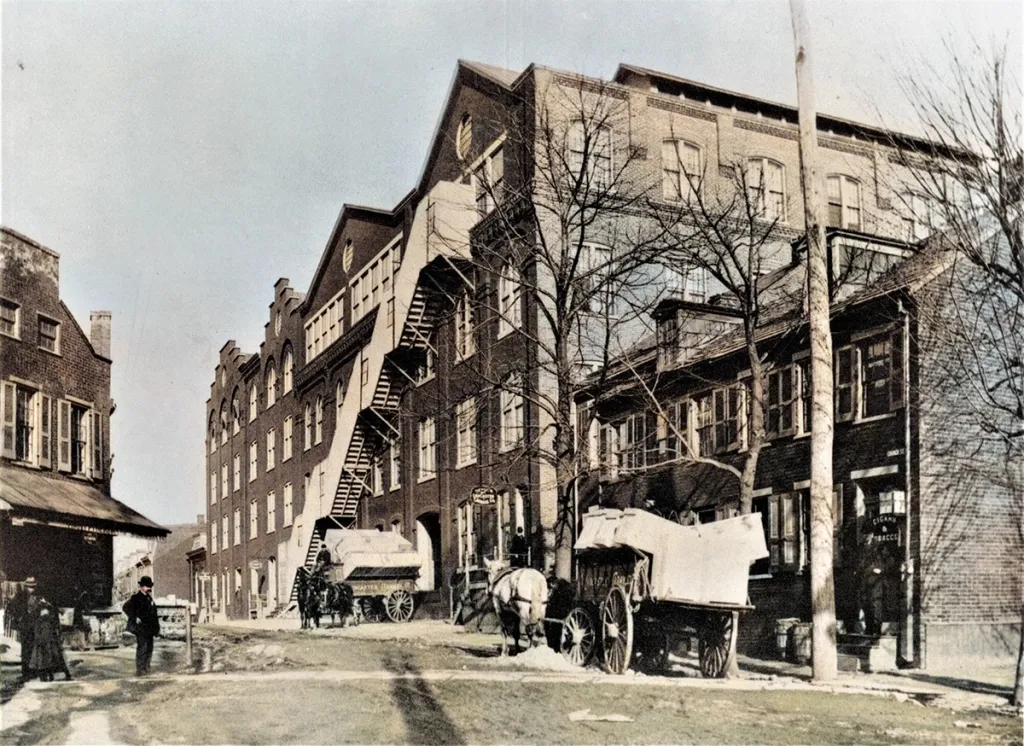
- 1893: During a visit to the World’s Columbian Exposition in Chicago, Hershey discovered a German chocolate-making machine. He bought it, brought it back to Lancaster, and started producing chocolate.
- 1900: Hershey sold his caramel company for $1 million and shifted his focus entirely to chocolate making.
THE UNSPOKEN RULE
Bring your learnings "home" with you.
What I learned from Hershey is the power of learning from the outside world—and then bringing that learning with you.
- When he failed with candy, he looked to caramel.
- When he failed in Pennsylvania, he looked to Denver.
- When he saw potential in a German chocolate-making machine, he brought it home with him.
This could be you!
- Are you a student questioning your choice of major? Look to an alum who is happy with their decision—and ask them why.
- Are you a professional questioning your choice of career? Look to someone who used to hold your job and is now doing something else—and ask them what they would have done differently.
Like Hershey realizing that he was pursuing the wrong type of candy in the wrong place, you might soon realize that maybe you're doing all the right things—except for a few tiny details.
This was—and is!—me with my How to Say It® flashcards:
- I realized that the cards weren't useful enough on their own—so I developed video tutorials for each card.
- I got feedback that the cards were too small—so re-launched them in a larger format.
- I was told that interviewing and networking were the most popular topics—so I doubled down on those two topics.
- ...and so much more.
See you next week for our AMA,
Gorick
PS: I answer a career question from a subscriber every month. You can submit your own question here.
WHAT I’M READING
Here are 3 articles that I found interesting recently (some with paywalls, but your first article should be free):
- Over-reliance on chatbots can diminish critical-thinking skills, study finds (The Guardian)
- Despite a competitive market, finding a summer job is highly beneficial for teens (NPR)
- The Rules for Grad School Loans Are About to Change. Here's What Borrowers Need to Know (Money)
MORE OF MY WORK
1. Keynote speaking: If your organization is looking for speakers for your internship program, new hire orientation, new student orientation, manager training, all-hands meetings, recruiting season, year-end performance evaluation season, or something else, let's chat!
2. HOW TO SAY IT ®: Flashcards that teach you to know what to say in every high-stakes professional setting via hundreds of fill-in-the-blank scripts (just like the examples above). Free shipping on all orders over $40.
3. The Unspoken Rules: My Wall Street Journal Bestseller that Arianna Huffington calls “a blueprint for anyone starting their career, entering a new role, or wanting to get unstuck.” Used by top companies and MBA programs.
4. Soft skills crash course: Hard skills get you hired, but a lack of soft skills gets you fired. Equip your interns and early career talent with the essential behaviors of high performers in just 3.5 hours.
STORY SOURCES
- 14-year-old Milton Hershey
- opened his first candy shop in Philadelphia
- one of the largest chocolate manufacturers in the world
- Hershey moved west to Denver, Colorado
- learned how to make fresh-milk caramels
- Chicago, Illinois, and New York, New York
- The Lancaster Caramel Company
- discovered a German chocolate-making machine
- sold the company for $1 million
- Hershey’s Lancaster company
- Hershey’s Chocolate World in New York, New York


