



TODAY'S TAKEAWAY
“I’m a subject matter expert trying to get promoted. How to advance my career on merit instead of networking?”
💡 The quick answer: Know your path, be vocal about your achievements, and look for a way “in.”
THE QUESTION
“How do you elevate your career based on merit and not purely networking? I prefer to accomplish tasks, generate results, and move on to the next challenge. I have spent my entire career doing that and providing that data to my superiors that present it (from slides I made) and they continue to get praised and promoted. Meanwhile, I am still in a position of being the SME [subject matter expert] and grinding everything out and being paid less than the people that are just good talkers.”
— “Rob” from Highlands Ranch, CO
GORICK'S RESPONSE
Hi “Rob,”
It sounds like you’re in a frustrating situation (that is also unfortunately all too common).
If you want to get promoted on merit alone, I’m sorry to have to tell you there’s no such thing. After all, it’s people who decide who gets promoted—and it’s simply not possible to be picked if people don’t even know what you’re capable of (let alone that you exist at all).
Though it’s not entirely possible to check a box and get promoted, there are ways to rely more on your contributions than on your schmoozing.
Here are the 3 things I’d suggest doing:
Reverse engineer your predecessors
Look at the people who used to hold your role and who are now in the role(s) you want. Go onto their LinkedIn profiles and internal bios (if they exist) and then ask yourself:
- How long were they in my current role? (This can tell you if you’re too early)
- What did they contribute? (This can tell you if you’re doing enough)
- Why do you think they were picked? (This can tell you if the circumstances are in your favor)
Then, consider contacting them or asking for an introduction from a mutual contact and then trying a script like this from the How to Say It® communication card series:
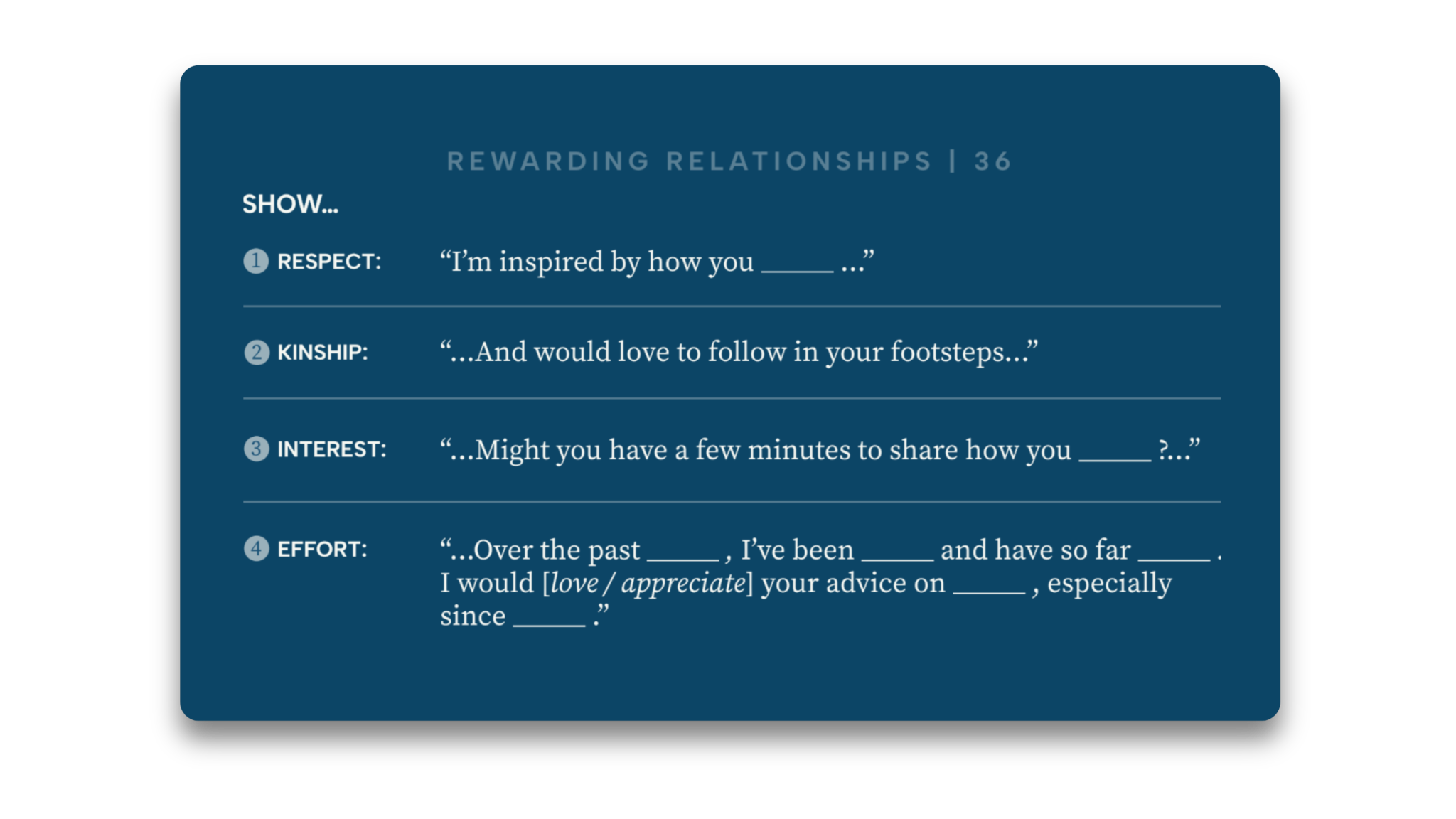
Publicly available information can tell you a lot about whether you’re on track, but nothing can replace a one-on-one conversation with someone who’s done it before. (And if they said that it was because of who they knew, how they sold themselves, and how they timed the conversation, then that will tell you a lot about how things really work in your organization.)
Articulate your value
Ask yourself:
- What exists thanks to you being on the team (that wasn’t there before)?
- What did you catch or fix before disaster struck (that other people didn’t)?
- What is cheaper / faster / better / safer (thanks to you)?
- What were you recognized for / hand-picked to own or lead?
- What did you deliver when the circumstances weren't ideal?
I know you expressed frustration towards “being paid less than the people that are just good talkers,” but doing good work and selling your value are not mutually exclusive.
After all, if you did good work but no one knows about it, then your contributions are like a tree that fell in the forest with no one hearing it.
So, the next time you’re asked to introduce yourself, don’t just stop at “Hi, my name is Rob.” Continue on with “...And I lead [project] which is an effort to [goal].”
And, the next time you’re asked to share what you’ve done as part of your annual review, don’t just stop at “Responsible for…” Reframe your output in terms of outcomes with language like, “Before, [disaster]. Now, [miracle] after I [heroism].”
Know what opportunities to look out for
Just because you were busy doesn’t mean you were impactful. Here’s a framework I recently shared with the VP cohort at a global bank (yes, I speak at organizations!):
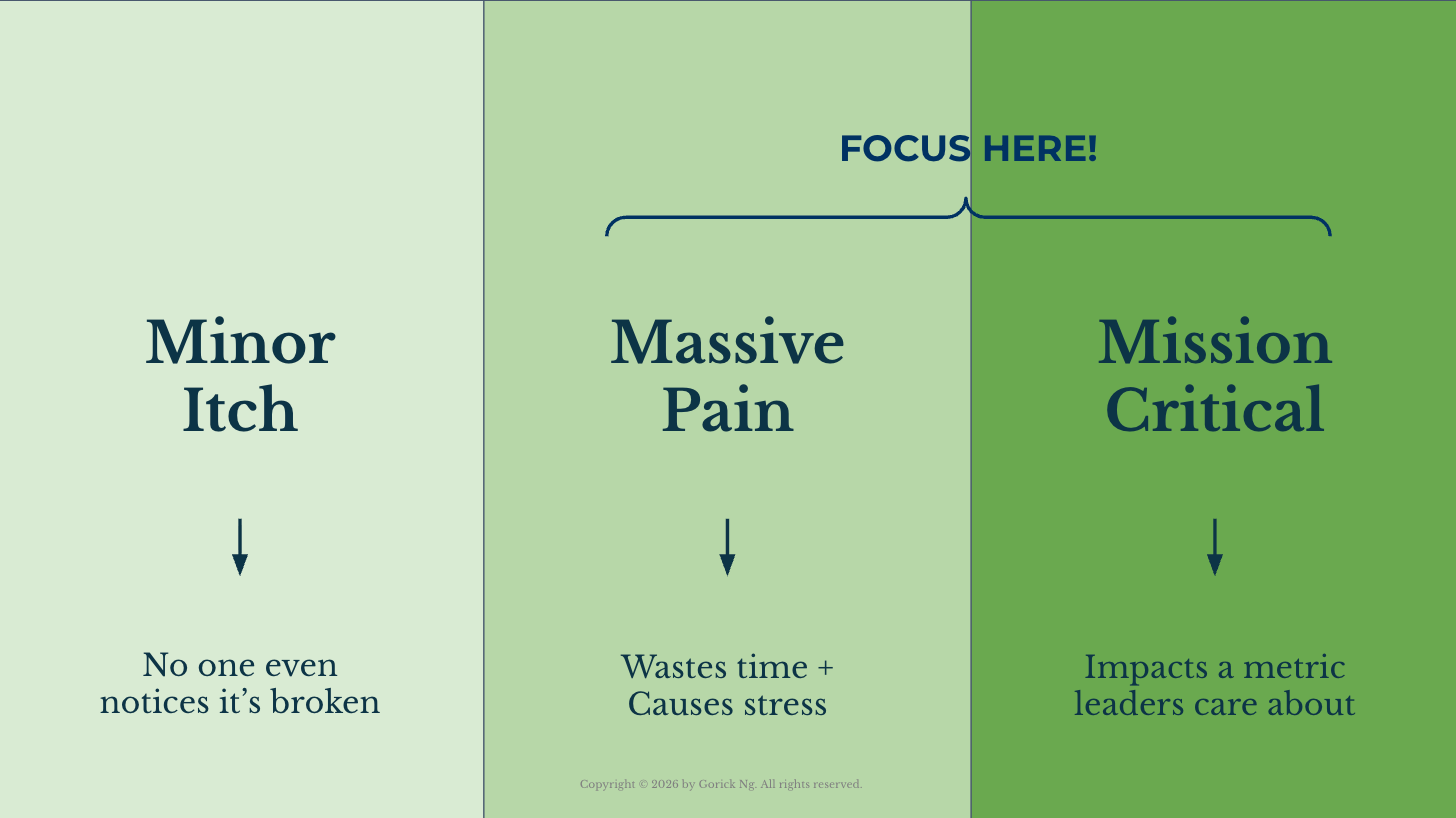
The idea is this: you weren’t hired to be busy; you were hired to help the higher-ups achieve their goals. The question is: how well are you aligning yourself to the goals they actually care about?
To find out, put yourself in the shoes of 4 people:
- Your manager
- Your manager’s manager
- The leader of your entire department
- The leader of your entire organization
Next, ask yourself 3 questions:
- What are their top 3 priorities?
- Where does my current to-do list sit in their to-do list?
- What can I do to better orient myself towards their top 3 goals?
Not sure? One of my favorite scripts from my How to Say It® communication card series (from the Terrific Teamwork deck) is: “What are your highest priorities over the coming weeks / quarter / year?” When in doubt, ask this question, listen to the response, and let their own words guide your to-do list.
The reality is that if the higher-ups can’t see how your work helps them achieve their goals (and how your ascension can help them even more than you already help them now), you’re merely a smart person who deserves their respect—and not a valuable one who deserves a promotion. So, don’t just be busy. Achieve goals—and big ones.
Hope this helped! You’ve got this!
See you next Tuesday for our next story and unspoken rule,
Gorick
Want me to answer your own career question?
Ask me here: https://forms.gorick.com/askgorick
WHAT I'M READING
Here are 3 articles that I found interesting recently (no paywalls, although it may depend on your cookies):
- How to Thrive in the AI Era of Work (Time Magazine)
- Gen Z and Millennials Want Workplace Romance Normalized—Even If It Breaks Company Rules (Inc)
- 'Mentally active' sitting may reduce dementia risk, study finds (NBC News)
MORE OF MY WORK
Every newsletter is free and a fraction of my work. Here are 3 of my paid offerings that may interest you:
1. Keynote speaking: If your organization is looking for speakers for your internship program, new hire orientation, new student orientation, manager training, all-hands meetings, recruiting season, year-end performance evaluation season, or something else, let's chat!
2. How to Say It: Flashcards that teach you to know what to say in every high-stakes professional setting via hundreds of fill-in-the-blank scripts (just like the examples above). Free shipping on all orders over $40.
3. The Unspoken Rules: My Wall Street Journal Bestseller that Arianna Huffington calls “a blueprint for anyone starting their career, entering a new role, or wanting to get unstuck.” Used by top companies and MBA programs.
4. Soft skills crash course: Hard skills get you hired, but a lack of soft skills gets you fired. Equip your interns and early career talent with the essential behaviors of high performers in just 3.5 hours.


